An experiment led by scientists at Cold Springs Harbor National Laboratory has transformed cancer cells into muscle cells.


An experiment led by scientists at Cold Springs Harbor National Laboratory has transformed cancer cells into muscle cells.

“Most people say they want their kids to be their own genetic offspring—but such a desire is in conflict with other evolving values around parenting and family.”
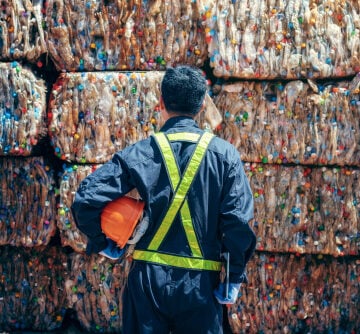
Imagine a world where plastic is always plentiful without ever having to make any more.

Rapamycin, a drug that slows the growth of cancer tumors, is being touted as a possible way to slow aging.

The longer a gouge or scrape or similar laceration to the skin stays open, the greater the danger of infection. Closing a wound can require stitches, a procedure that carries problems and dangers of its own.

A “proton flow battery” created at RMIT University in Australia can store as much energy per unit of weight as a mid-range lithium-ion battery and is just as energy-efficient, the developers say.

Generative AI could boost global productivity by 1 percent a year for the 10 years after the technology is widespread in the world’s economy, a period that will begin in the last half of this decade, according to an analysis by Goldman Sachs Economic Research.

Using light to diagnose the presence of viruses or other invaders in the body isn’t new. Typically, the tests use a probe molecule that locks onto a gene known to belong to the villain. The combination of the two changes the frequency of light emitted by the target, and the change can be seen and quantified by an optical microscope.

Macular degeneration, a major cause of blindness on the rise in developed nations, occurs when retinal cells die in the central area of the retinal field, leaving sufferers with a black hole in the center of their vision.
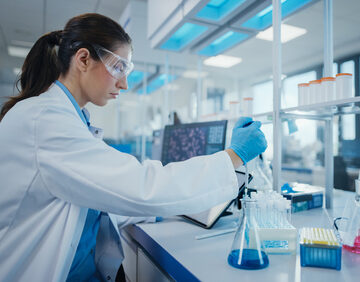
Every living thing is made of proteins, and proteins are made from just 20 amino acids that nature provides.