A report this past week detailed how scientists are now perfecting technology that can deliver mRNA “vaccines” through the air.

A report this past week detailed how scientists are now perfecting technology that can deliver mRNA “vaccines” through the air.
Elderly cells in our bodies stop functioning but live on, after a fashion, causing inflammation and emitting waste and other damaging chemicals into the bloodstream.
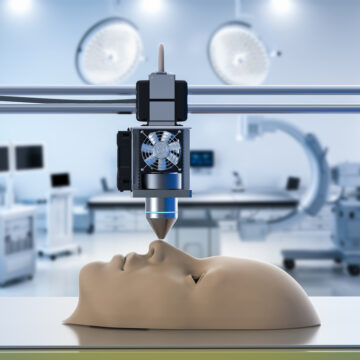
Using “bio-inks,” researchers at Australia’s Monash University have 3D-printed living neurons—brain cells—that continue growing in a lab and are able to send and respond to nerve signals.

Making cement—the main ingredient in concrete—is estimated to be responsible for producing 8 percent of the world’s carbon dioxide emissions, at a rate of a ton of CO2 per ton of cement.
Discarded plastic—both large and microscopic—circles the globe, choking our oceans and polluting our food supply, ultimately finding their way into your body where they can accumulate over time

Tesla has invented a car-making technique called “gigacasting” that could cut manufacturing costs in half and help Elon Musk achieve his dream of profitably supplying the world with millions of cheap electric vehicles.

Pigs have long been seen as possible incubators of human organs to use in transplants. Experiments at California’s Altos Labs have moved science closer to that goal.

Hydrogen, a growing factor in the global green-energy transition, is usually distilled industrially from natural gas. Now the U.S. energy department is going to test a controversial theory that we can suck hydrogen out of the ground the way we do oil and gas.

At the University of California San Diego, researchers have 3D-printed an “engineered living material” that neutralizes organic pollutants in water, then can be dissolved by a common nontoxic compound.

Scientists at Australia’s Monash University have isolated an enzyme in a common soil bacterium that pulls hydrogen from air and uses it to make an electric current.