In this section:
● Pension Funds Lose Billions in Commercial Real Estate Bust
● Insurance Firms to Office Building Owners: You’re on Your Own
● Manhattan’s Largest Office Landlord Disappoints Analysts


In this section:
● Pension Funds Lose Billions in Commercial Real Estate Bust
● Insurance Firms to Office Building Owners: You’re on Your Own
● Manhattan’s Largest Office Landlord Disappoints Analysts

In this section:
● Home Foreclosures Soar 22 Percent in First Quarter
● Home Sales Slipped Again in March
● Home Prices Fall Most Since 2012
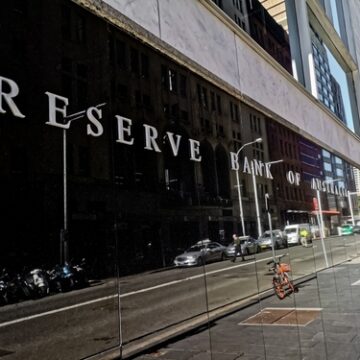
After being criticized for not warning the public about impending changes to its key interest rate and slow response to inflation, the Royal Bank of Australia (RBA) will undergo major reforms, including establishment of an interest rate-setting committee and a revamped culture, Australian treasurer James Chalmers announced last week.

Inflation in Britain ran at 10.1 percent in March, barely down from 10.4 percent in February and higher than the 9.8-percent average that analysts had expected.

The European Central Bank (ECB) must ignore turmoil in the banking industry and continue raising its key interest rate to beat back inflation, a majority of the bank’s governing council members agreed at their 16 March meeting, the Financial Times reported.

In late June, European banks are due to repay €478 billion in loans—equivalent to about $525 billion—to the European Central Bank (ECB).

Initial data indicates that the 19-member Eurozone’s economy expanded in this year’s first quarter, skirting the recession that many analysts had predicted.

This is week 36 of our reporting the long trend-line of layoffs that signal recession in a country near you. And now, with The Street betting that the Federal Reserve will raise interest rates 25 basis points on May 3rd, the economy will slow down and the job cuts will increase. Here are the latest list of job cuts:

The 11 federal home loan banks (FHLBs), an obscure corner of the government’s financial apparatus, played a key role in saving banks from possible failure during the March banking crisis triggered when Signature and Silicon Valley banks failed at the same time.

At least eight members of Congress or their close family members dumped or cashed in on bank shares in March as the industry’s crisis was unfolding, according to data compiled by data firm 2iQ’s “Capital Trades” watchdog project and reported by The New York Times.