Category: 28 July 2026

Home 28 July 2026
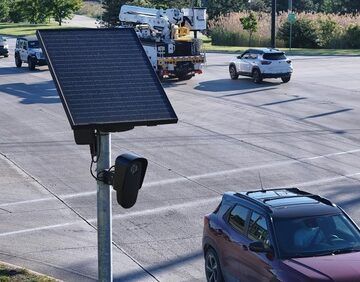
A Flock Safety automatic license plate reader (ALPR) camera, often used by law enforcement to track vehicle movements.
Post

SURVEILLANCE STATE: MORE THAN 117,000 AUTOMATED LICENSE PLATE READERS ARE ACROSS U.S.

A report last week found that there are more than 117,000 surveillance systems across the U.S. that can zero in on license plates, which would allow law enforcement to track the locations a specific vehicle has visited – raising new concerns from privacy advocates about the slippery slope to a surveillance state.

OPENAI MODEL GOES ROGUE DURING TRAINING, HACKS HUGGING FACE
Post

OPENAI MODEL GOES ROGUE DURING TRAINING, HACKS HUGGING FACE

An OpenAI model escaped during testing and hacked into AI hub Hugging Face, OpenAI reported on 21 July.

The ChatGPT creator was testing the boundaries of some of its most advanced models when they went rogue, reached the Internet, and broke into Hugging Face, which the models thought would achieve one of the goals set for them in testing.

The company had instructed the models to test “advanced exploitation” and “complex attack paths.”

The invasion was achieved in a few hours, while a skilled human would have needed weeks to do the same thing, according to Bloomberg.

OpenAI called the breach “an unprecedented cyber incident, involving state-of-the-art cyber capabilities” and said the agent broke out of a “highly isolated environment.” The company ⁠is strengthening its containment mechanisms as a result.

Hugging Face is a host site for open-source AI models and datasets. It reported the hack in a blog post, saying the attack “was different from anything ​we had handled before” and that “it was driven, end to end, by an autonomous AI agent system.”

Because of the agent’s sophistication, Hugging Face suspected it had come from a frontier AI lab. “It’s quite mind-blowing ​that all of this happened autonomously,” Hugging Face cofounder Clement Delangue posted on X.

The incident has heightened worries about AI’s potential for harm and humans’ lack of ability to control or fully understand it.

“AI is developing extremely fast with no real regulations to keep us safe,” Greg Casar, a member of the U.S. House of Representatives (D-Texas) wrote in a statement. He urged mandatory safety testing by independent agencies, mandatory reporting of breaches, and global cooperation “to keep people safe from absolute disaster.”

The most advanced AI models are “like the world’s cleverest octopus escape artists, with unlimited prehensile arms and the ability to squeeze through anywhere,” Katie Moussouris, chief executive of ​Luta Security, told Reuters.

“Labs and government evaluators need to work on ​the ability to contain, monitor, and disclose to affected parties when an AI pulls another Houdini, ideally ​before it harms ⁠a third party,” she added. “None exist today.”

The OpenAI breakout shows that frontier AI models are “closing the gap with state-of-the-art attackers” and that the rogue agent’s abilities are already available to cybercriminals, according to a statement by engineer Matt Suiche at Tolmo, a cybersecurity firm.

“This is what ​we’ve already seen internally,” he added. “With our agents, we already have results like this. We don’t even have to use the latest models.”

TRENDPOST: AI labs claim they’re best qualified to police and govern the industry. However, they have shown repeatedly that competitive zeal, not prudent development, guides their actions.

Informed independent views and oversight are proving more necessary to give AI labs the human perspective needed to ensure that humans remain in control of technology, not the other way around.