The idea of collecting solar energy out beyond Earth’s atmosphere and then beaming it to receivers on the ground has been around for years; experiments have shown the concept is feasible.


The idea of collecting solar energy out beyond Earth’s atmosphere and then beaming it to receivers on the ground has been around for years; experiments have shown the concept is feasible.
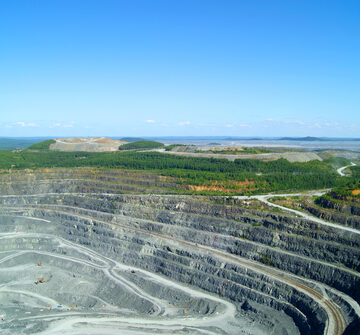
Rare earth metals are essential in virtually every kind of electronic device with a motor, from electric cars to wind turbines.

But not just any sand. At Stockholm University, scientists tested porous particles of silica—sand —as a weight loss aid.

London-based Botanical Water Technologies (BWT) has partnered with Ingomar Packing Co., one of the chief U.S. processors of tomatoes, to test BWT’s method of harvesting water from tomatoes.

Meta Platforms, Facebook’s parent company, hopes its’ new, $1,500 ProQuest virtual reality headset will prove to be a better venue for virtual business meetings than personal computers.

Sandia National Laboratory, Texas Tech University, and BASF, the world’s largest chemicals manufacturer, are testing a wind energy generator by a Texas start-up called Aeromine Technologies that claims its design makes 150 percent more energy than a solar panel array of the same price and takes up a tenth of the space.

Biologists and computer scientists at Australia’s Monash University have taught a cluster of brain cells living in a lab dish to play Pong, the rudimentary ping-pong video game from the 1970s.

Conventional scientific wisdom says that Alzheimer’s Disease is caused by a protein called amyloid-beta gathering in clots among brain cells, preventing them from communicating properly.
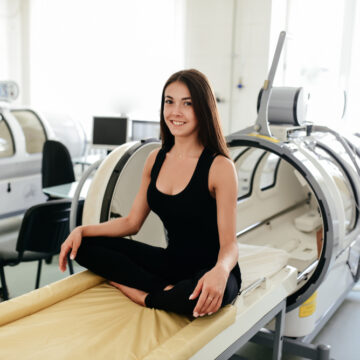
Two things happen to each of us as we age. First, the telomeres—the “end caps” on our DNA strands that protect our chromosomes—shorten.
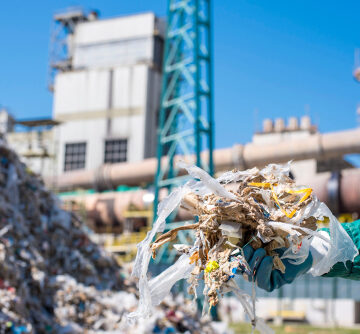
Mixed or hard-to-recycle plastics could be turned into fuel by heating them in an oxygen-free chamber. However, the process—called “pyrolysis”— can only handle certain kinds of plastic and several of the tests are struggling to operate at commercial scale.