Job worries among American workers are close to a record high, a new poll by the Federal Reserve Bank of New York discovered.


Job worries among American workers are close to a record high, a new poll by the Federal Reserve Bank of New York discovered.

Bank and asset management stocks took a beating recently after investors panicked over threats that AI will usurp financial advisory services.

In the way that the K-shaped economy is winnowing the middle class into haves and have-nots, it also is forcing the food business to rethink its sales strategy.

The Producer Price Index (PPI), a measure of what producers charge retailers for their products, climbed 0.5 percent in January from December, vaulting past the 0.3 percent consensus forecast by economists in a Dow Jones survey.

UBS, the Swiss investment bank and financial services firm, has moderated its outlook for U.S. stocks, saying that the factors that powered the multi-year bull market are running out of energy.
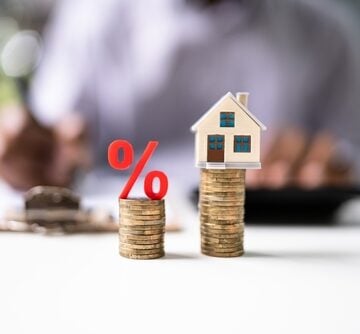
Last week, for the first time since September 2022, the U.S. national average mortgage interest rate on a 30-year, fixed-rate mortgage dipped below 6 percent.
The average rate for the week ending 27 February was 5.98 percent, according to the Federal Home Loan Mortgage Corp. (Freddie Mac).
The rate briefly rose past 7 percent in January 2025 but has bumped down steadily in recent months as inflation has fallen. The U.S. Federal Reserve cut its key interest rate three times in the last half of 2025. Fed rate cuts do not affect mortgage rates directly but added to the downward momentum, The Wall Street Journal noted.
The 6-percent mark is a psychological turning point that could draw more buyers into the market, real estate agents think. The lower rate is also expected to set off a flood or refinancing applications from homeowners who bought when rates were a full percentage point or more higher than now.
Buyers have let go of hopes that mortgage rates will tumble back to 3 percent where they were before the COVID War, Bill Banfield, Rocket Mortgage chief business officer, told the WSJ. They understand that 5 to 6 percent is the new norm, he added, and are now more willing to buy at that rate.
The lower rate comes near the beginning of the year’s busiest selling season of spring and early summer.
However, home prices are stuck near record levels, with too few homes available to meet demand and many buyers are leery of committing to a hefty mortgage payment and rising electricity and home insurance costs in an uncertain economy and jobs market.
Even though mortgage rates fell below 6 percent last week, applications for mortgages to buy a home were the fewest since last April, the Mortgage Bankers Association (MBA) said. In January, home sales were off 8.4 percent year on year, the worst decline since 2022.
With a mortgage rate below 6 percent, a median-income family could afford a home priced at $331,483, the highest price in more than three years, online listings site Zillow calculated. However, the site also found the median home selling price currently to be $357,275.
“I don’t think rates are as important as jobs and confidence” as factors that drive home purchases, CEO Margaret Whelan at Whelan Advisory, an investment bank for the housing industry, said in a WSJ interview.
Donald Trump ordered Freddie Mac and the Federal National Mortgage Association (Fannie Mae) to buy an additional $200 billion in mortgage bonds, putting more cash into the lending pool. However, that amount was only “marginally helpful,” CFO Bryan Preston at Fifth Third Bancorp said to the WSJ.
Analysts are not expecting rates to decline further this year. The MBA has forecasted a 6.1-percent average rate through 2026; Fannie Mae foresees the average at 6 percent.
TREND FORECAST: As mortgage rates fall, they unleash pent-up demand that will grab available houses listed at lower prices. Therefore, average national prices are unlikely to fall greatly. However, prices will continue to slip in large metro areas where prices inflated unrealistically during the buying frenzy.
Mortgage rates tend to move with the interest rate the U.S. government pays on the treasury’s 10-year note. With government debt rising without letup, there is no reason to think mortgage rates will fall below current levels.
That will continue to pressure home builders to cut prices and offer perks to buyers to move newly built homes, cutting their margins, profits, and earnings. The homebuilding industry looks to be in for another tight year.
The market also will pressure lenders to create special promotions and financial structures to open the market to more buyers on the margin under current conditions.
Government agencies are now even more likely to step in to subsidize creation of affordable housing at public expense.
TREND FORECAST: Treasury yields rose as concerns increase that because of rising oil prices as a result of the Iran war, inflation rates will spike. As a result of the rising yields, the 30-year mortgage rate jumped 13 basis points to 6.12 percent, according to Mortgage News Daily.
Not only will higher mortgage rates push down home sales, the longer the war ramps up, the deeper the global economies will fall... and the economies will fall with it.
Get ready for Dragflation; declining economic growth and rising inflation.

Brent Crude prices have spiked. In his State of the Union address last Tuesday, President Trump said that gas prices are “now below $2.30 a gallon in most states and in some places, $1.99 a gallon.”

What goes up must come down and a growing number of stock market players are expecting that time has come for AI stocks, The Wall Street Journal reported.