Four investment managers have pooled resources to buy AES, a Virginia-based electric power producer operating in 14 countries.


Four investment managers have pooled resources to buy AES, a Virginia-based electric power producer operating in 14 countries.
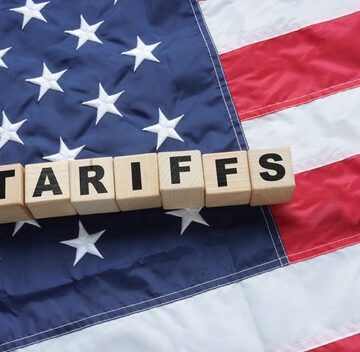
A key purpose of Donald Trump’s tariffs was to minimize, or even eliminate, the U.S. trade deficit.

On 1 March, OPEC+ agreed to add 206,000 barrels a day to the world’s oil supply, beginning next month, to offset the effective shutdown of the Strait of Hormuz, a 21-mile-wide throat of water that connects the Persian Gulf to the Red Sea off the Iranian coast.

Job worries among American workers are close to a record high, a new poll by the Federal Reserve Bank of New York discovered.

Bank and asset management stocks took a beating recently after investors panicked over threats that AI will usurp financial advisory services.

In the way that the K-shaped economy is winnowing the middle class into haves and have-nots, it also is forcing the food business to rethink its sales strategy.

The Producer Price Index (PPI), a measure of what producers charge retailers for their products, climbed 0.5 percent in January from December, vaulting past the 0.3 percent consensus forecast by economists in a Dow Jones survey.

UBS, the Swiss investment bank and financial services firm, has moderated its outlook for U.S. stocks, saying that the factors that powered the multi-year bull market are running out of energy.

Last week, for the first time since September 2022, the U.S. national average mortgage interest rate on a 30-year, fixed-rate mortgage dipped below 6 percent.
The average rate for the week ending 27 February was 5.98 percent, according to the Federal Home Loan Mortgage Corp. (Freddie Mac).
The rate briefly rose past 7 percent in January 2025 but has bumped down steadily in recent months as inflation has fallen. The U.S. Federal Reserve cut its key interest rate three times in the last half of 2025. Fed rate cuts do not affect mortgage rates directly but added to the downward momentum, The Wall Street Journal noted.
The 6-percent mark is a psychological turning point that could draw more buyers into the market, real estate agents think. The lower rate is also expected to set off a flood or refinancing applications from homeowners who bought when rates were a full percentage point or more higher than now.
Buyers have let go of hopes that mortgage rates will tumble back to 3 percent where they were before the COVID War, Bill Banfield, Rocket Mortgage chief business officer, told the WSJ. They understand that 5 to 6 percent is the new norm, he added, and are now more willing to buy at that rate.
The lower rate comes near the beginning of the year’s busiest selling season of spring and early summer.
However, home prices are stuck near record levels, with too few homes available to meet demand and many buyers are leery of committing to a hefty mortgage payment and rising electricity and home insurance costs in an uncertain economy and jobs market.
Even though mortgage rates fell below 6 percent last week, applications for mortgages to buy a home were the fewest since last April, the Mortgage Bankers Association (MBA) said. In January, home sales were off 8.4 percent year on year, the worst decline since 2022.
With a mortgage rate below 6 percent, a median-income family could afford a home priced at $331,483, the highest price in more than three years, online listings site Zillow calculated. However, the site also found the median home selling price currently to be $357,275.
“I don’t think rates are as important as jobs and confidence” as factors that drive home purchases, CEO Margaret Whelan at Whelan Advisory, an investment bank for the housing industry, said in a WSJ interview.
Donald Trump ordered Freddie Mac and the Federal National Mortgage Association (Fannie Mae) to buy an additional $200 billion in mortgage bonds, putting more cash into the lending pool. However, that amount was only “marginally helpful,” CFO Bryan Preston at Fifth Third Bancorp said to the WSJ.
Analysts are not expecting rates to decline further this year. The MBA has forecasted a 6.1-percent average rate through 2026; Fannie Mae foresees the average at 6 percent.
TREND FORECAST: As mortgage rates fall, they unleash pent-up demand that will grab available houses listed at lower prices. Therefore, average national prices are unlikely to fall greatly. However, prices will continue to slip in large metro areas where prices inflated unrealistically during the buying frenzy.
Mortgage rates tend to move with the interest rate the U.S. government pays on the treasury’s 10-year note. With government debt rising without letup, there is no reason to think mortgage rates will fall below current levels.
That will continue to pressure home builders to cut prices and offer perks to buyers to move newly built homes, cutting their margins, profits, and earnings. The homebuilding industry looks to be in for another tight year.
The market also will pressure lenders to create special promotions and financial structures to open the market to more buyers on the margin under current conditions.
Government agencies are now even more likely to step in to subsidize creation of affordable housing at public expense.
TREND FORECAST: Treasury yields rose as concerns increase that because of rising oil prices as a result of the Iran war, inflation rates will spike. As a result of the rising yields, the 30-year mortgage rate jumped 13 basis points to 6.12 percent, according to Mortgage News Daily.
Not only will higher mortgage rates push down home sales, the longer the war ramps up, the deeper the global economies will fall... and the economies will fall with it.
Get ready for Dragflation; declining economic growth and rising inflation.

Over the past weekend, some apologists for President Donald Trump’s recently ordered attacks on Iran argued that because Trump's plans call for a quick strike, the attacks do not constitute a war. George Orwell is vindicated yet again.
These apologists believe that calling a war something else means it is not a war, and so moral and constitutional justifications are unnecessary.
No rational observer looking at 2,000-pound bombs being dropped on military targets and thousands of missiles being fired indiscriminately at both civilians and military personnel in Iran can conclude that these events constitute anything but a war.
That recognition triggers a series of analyses -- moral, constitutional and legal.
The moral dimension addresses both the causes and the conduct of war.
The standard requirements for a just war are that war is a last resort to avoid truly imminent violence or profound massive injustice. It must be triggered by a legitimate authority, its purpose must be clear and just, and the damage it produces must not outweigh the evil it purports to eliminate. Its conduct must avoid killing non-combatants, and the weapons and tactics used must be proportionate to the war’s objectives.
Just war, of course, prohibits the employment of any weapons that fail to discriminate between combatants and non-combatants.
Trump’s war in Iran fails all these. It was not commenced by a legitimate authority as Congress has not declared war on Iran. The president and his folks have not identified any imminent violence Iran was about to inflict upon the U.S. They have confused the public on the war’s purpose. Is it to force out the current Iranian government or to destroy its offensive weaponry and nuclear capabilities or -- the newest condition -- to eliminate its navy?
None of these is a just cause as the U.S. has no moral or legal basis for removing a foreign government or emasculating it in the face of its enemies. As for damage, we have seen already the killing of 150 little girls while at a school last weekend and the attacks on a Tehran hospital.
The failure of Trump’s war to comply even minimally with moral standards is also exemplified by the constitutional implications raised by a presidentially initiated war. When James Madison and his colleagues were addressing the war clauses in the Constitution, they were in easy agreement that if the president could both declare war and wage war, he wouldn’t be a president, he’d be prince.
Hence the textual separation in the Constitution of war-making from war-waging. Only Congress can declare war and only the president can wage war. This is the power to initiate war, not to ratify it after the president has initiated it. The president can request of Congress a declaration of war, but the decision to start one is textually confined solely to Congress.
If we get into the business of congressional ratification of presidentially initiated wars, we will continue the slow and inexorable normalization of presidential force. That’s not what the Constitution requires.
This is not a rhetorical or theoretical argument. We live in a supposed constitutional republic. The Constitution is supposed to be the supreme law of the land. It is the sole source of power and authority for Congress, the president and the federal courts. If it can be violated or ignored in a matter as grave as that which results in the industrialized deaths of foreign persons at American hands and similar deaths of Americans at foreign hands, then it is of little value as the creator and restrainer of the federal government.
Even the 1973 War Powers Resolution, which requires reporting to the Congress within 48 hours of the onset of presidentially initiated military hostilities, contemplates the use of the military when a threat to the U.S. is imminent. This raises two issues.
First, the administration has not articulated with credibility any imminent threat. The secretary of defense has said, at best, that Iran has ambitions to attack the U.S. one day. That is hardly an imminent threat. An imminent threat must articulate a rational basis rooted in immediacy and grounded in the emergent need to protect U.S. national security. It cannot be speculative.
Second, the statute requires that the president report in writing the reasons for war to the full Congress so it can approve or disapprove. Trump sent a political diatribe to Congress with no articulation of immediacy, but he did so only after he had his secretary of state report in secret on immediacy to the Gang of Eight -- the congressional and intelligence committees’ leadership from both parties.
But the Gang of Eight is not the Congress. And because these reports were made in secret, the eight recipients of them cannot inform their congressional colleagues or the media or their constituents. What kind of representative government is that? What did the secretary of state tell these eight members of Congress?
What’s going on here?
What’s going on is an immoral, unconstitutional and illegal war of choice. It violates the Geneva Conventions and the United Nations Charter, all treaties which the U.S. wrote and which the U.S. Senate ratified. The former requires conformity to just war principles and prohibits killing little girls and hospital patients. The latter prohibits war between member states unless to avoid imminent violence or with the consent of the U.N. Security Council. Under the Constitution, treaties are the law of the land.
These are dangerous times and this is a dangerous war -- for the moral order, for constitutional government and for personal freedom. If the president can get away with killing people abroad under a scheme that meets no accepted moral or legal standards and violates the plain language of the Constitution, what can he get away with at home?
We might find out. The problem with going abroad searching for monsters who have ambitions to harm you is that they have a way of following you home.
To learn more about Judge Andrew Napolitano, visit https://JudgeNap.com.
COPYRIGHT 2026 ANDREW P. NAPOLITANO
The views and opinions expressed in this article are those of the author[s] and do not necessarily reflect the views of The Trends Journal.